USIHS Lecture: ‘Violence, Colonialism and the Mid-Tudor Monarchy: Ireland in Context’

Prof Neil Murphy (Northumbria University)

Thursday 19 February 2026, 6pm (online and im-person in 27 University Square, QUB, Belfast)
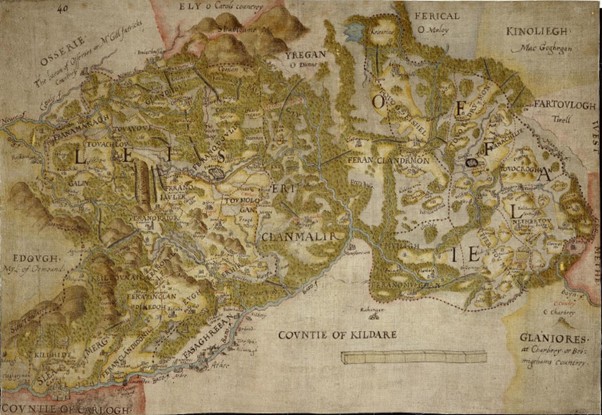
This paper re-examines the origins of the early modern English—later British—Empire, which is traditionally traced to the establishment of colonies in Ireland during the second half of the sixteenth century. Historians have long asserted that these ventures saw the emergence of uniquely brutal methods of warfare. According to this argument, the Irish were savages and thus the restraints on violence typically used when fighting other Europeans did not apply when campaigning in Ireland. This paper situates the interplay between violence and colonialism seen in Ireland within the broader context of mid-Tudor territorial expansion, showing that English practices in Ireland were far from unique. The plantations of Laois and Offaly in the 1550s built on earlier Tudor colonial experiments in on the continent, while extreme violence was widely inflicted on civilian populations during Henry VIII’s wars in France and Scotland. By adopting a comparative approach to Tudor frontiers and situating actions in Ireland in a broader context, this paper offers fresh insights into the interplay between violence and territorial expansion in the sixteenth century.

Biography: I am Professor of Medieval and Early Modern History and the Head of the School of Humanities and Social Sciences at Northumbria University. I have published on a range of topics between the thirteenth and eighteenth centuries, though much of my recent work has focused on the wars of Henry VIII. I have published five books – including The Tudor Occupation of Boulogne (CUP, 2019) and Henry VIII, the Duke of Albany and the Anglo-Scottish War of 1522-4 (Woodbridge, 2023) – and am currently finishing two books further on Henry VIII. The first looks at his European ambitions, while the second examines his use of spying and espionage.

All welcome: Registration link to follow.
USIHS Lecture – Dr Henry Jefferies, ‘Irish women and the Reformation’

Thursday 4 December at 6pm (27 University Square 01/003, Queen’s University Belfast, and online).

You are very welcome to the final USIHS seminar of 2025 when Dr Henry Jefferies will speak on Irish women and the Reformation. This is a free event open to all.

The Protestant Reformation of the sixteenth century represented the greatest religious crisis in European history since the conversion of the Roman emperor Constantine to Christianity in the fourth century. Protestant reformers characterised the Catholic Church as an evil entity headed by the Antichrist, with doctrines and religious practices that were false. The Reformers looked to the ‘Word of God’, the Bible, to recreate the Church of Jesus de novo. They confronted women with a choice that was more important than simply a question of life and death – it concerned life after death! The Bible was clear as to how a woman was supposed to make her choice: 

“If there is anything they desire to learn, let them ask their husbands at home”. 1 Corinthians 14:34-35 ESV.

“Let a woman learn quietly with all submissiveness. I do not permit a woman to teach or to exercise authority over a man; rather, she is to remain quiet”. 1 Timothy 2:11-14 ESV

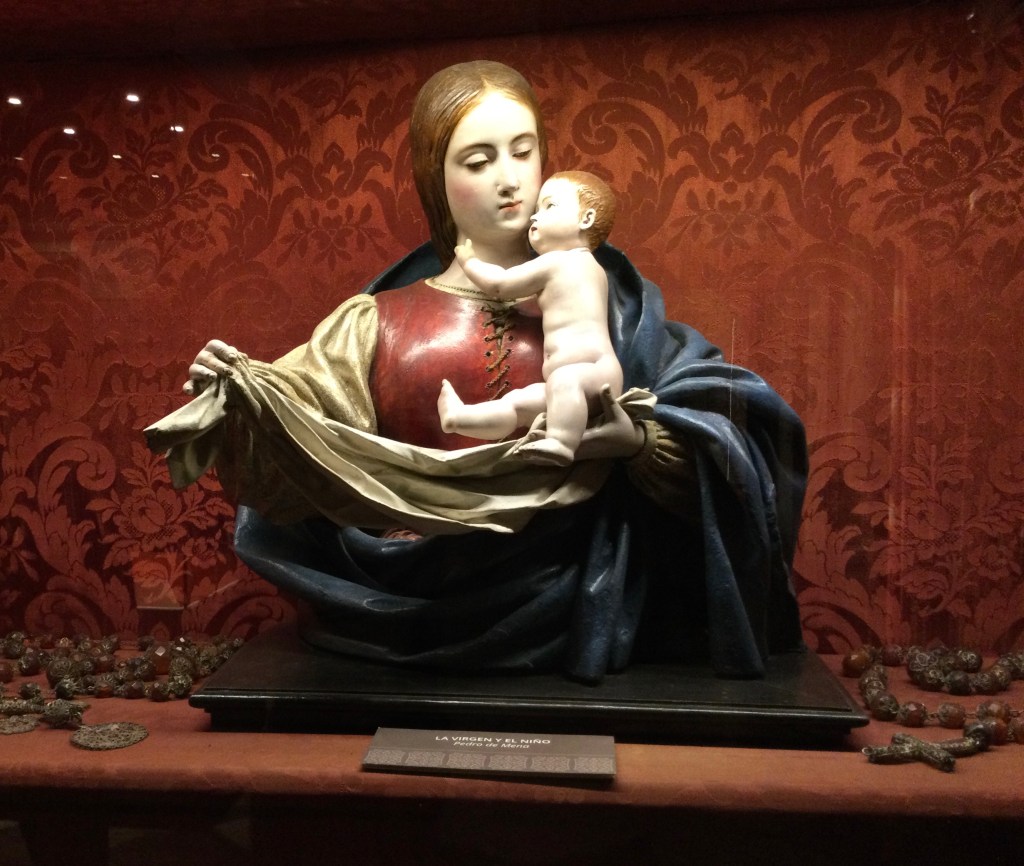
This paper looks at the responses of Irish women to the Reformation. It reveals that despite the Bible’s injunctions, they exercised considerable agency, perhaps even decisive agency, in the religious struggles of the sixteenth century.

RECORDING:

USIHS Lecture – Dr Sophie Cooper (QUB): Building to feel ‘at home’

USIHS Seminar. Online only, Thursday 13 November at 7pm.

Building to feel ‘at home’: Embedding/embedded memory in the built environments of Belfast and the diaspora.

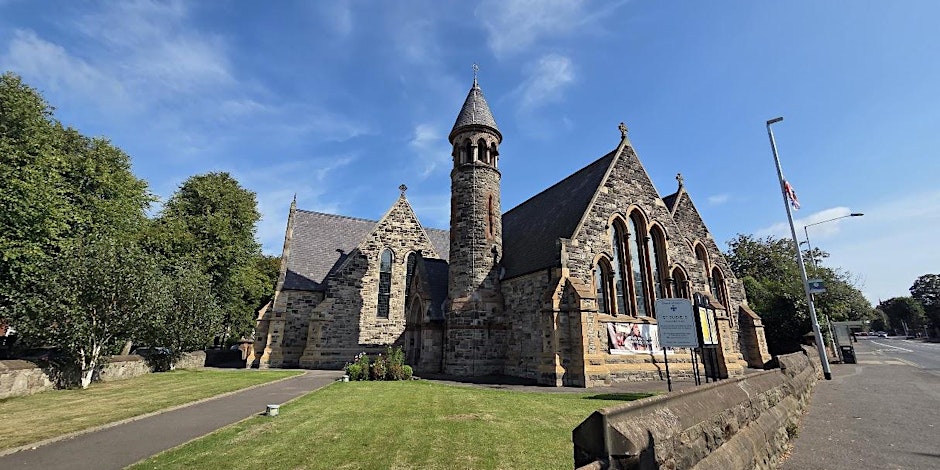
This paper will explore the varied ways that parishioners, particularly female parishioners, have used and ‘put their mark’ on religious buildings to facilitate a sense of belonging in Ireland and abroad. Drawing on research from Sophie’s ‘Mapping Belfast’s Places of Worship’ project and her wider work on migrant belonging in the Irish diaspora, this paper explores some of the ways that people in the past used their built environments to feel ‘at home’. It will also consider some of the ways that demographic shifts have led to the repurposing or changing use of these buildings – and the (not so) hidden histories that they have embedded in them.

Dr Sophie Cooper is President of the Ulster Society of Irish Historical Studies and Senior Lecturer in Liberal Arts at Queen’s University Belfast. She is a historian of Ireland and the Irish diaspora in the nineteenth and early twentieth centuries. Sophie’s first book Forging Identities in the Irish World: Melbourne and Chicago, c.1830-1922, was published by Edinburgh University Press in 2022 and won the ACIS Lawrence J. McCaffrey Prize for Books on Irish America.

RECORDING:

USIHS Lecture

Thursday 16 October: 6pm (27 University Square/01/003 (QUB) and online via Teams)

Seán Ó Hoireabhárd (Maynooth University), ‘When Ulster became Ulster and Meath became Meath: The divorce of the Northern and Southern Uí Néill in the Central Middle Ages’

Free event – all welcome!

RECORDING:

Abstract:

The Uí Néill dynasty were the most important political collective in medieval Ireland. From the very beginning of recorded history down to the seventeenth century and the end of the Gaelic order, their leading men were consistently among the most powerful on the island. They controlled both the midlands and north-west Ulster, and their literary output and propaganda promoted the notion that ‘Tara’ was a metonym for Ireland – and so, to be ‘king of Tara’ meant to be ‘king of Ireland’. The Southern and Northern branches of the dynasty alternated in this role, and while it was at times more aspirational than demonstrable, there were kings of Tara who manifested their authority across the island, convincing even their most trenchant enemies of their prestige. But the system of alternating kingship that worked so well to cement their power failed around the turn of the millennium, and by the twelfth century new identities prevailed. ‘Mide’, ‘Meath’, literally ‘Middle’ came to be seen as a province stretching from the Shannon to the sea, while an idea of a province called ‘the North’, which reached from coast to coast also began to be articulated. Ultimately, this acquired the name of an older identity, ‘Ulster’. This paper looks at the political successes and failures of the Uí Néill in the Central Middle Ages, asking how their common identity broke down and considering how new ones took their place.

J.C. Beckett Lecture 2025

Prof. Laura Kelly (University of Strathclyde):

‘The Anti-Abortion Movement in Ireland, c.1972-92’

Thursday 22 May 2025, 6pm, at PRONI.

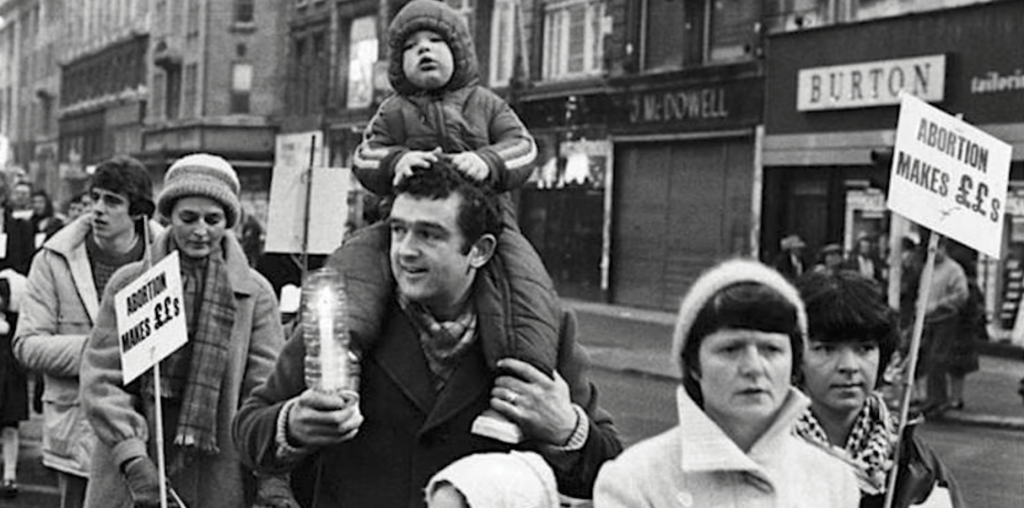
This lecture explores the history of anti-abortion activism in Ireland from the early 1970s to the early 1990s. Utilising oral history interviews with activists and a range of rich archival sources including anti-abortion publications, government archives, diocesan records and contemporary newspapers, it traces the history of one of the most significant social movements in Ireland. Drawing on approaches from the history of emotions, oral history, and gender history, it discusses show how and why the anti-abortion movement gained such strength in 1970s and 1980s Ireland, what motivated ‘ordinary’ people to get involved in it, the campaigns and strategies of activists, and what its success and ultimate decline reveal about wider changes in Irish society. I will argue that transnational networks, particularly between Irish and American activists, were crucial to the success of the movement in its early years. Ultimately, by illuminating the experiences, motivations, and strategies of anti-abortion activists, this paper helps to better contextualise the wider battle around reproductive rights in Ireland, and the ongoing legacy of this activism.

The J.C. Beckett Annual Lecture is hosted by the Ulster Society for Irish Historical Studies. This is a free public event, all welcome.

Register at: https://www.eventbrite.ie/e/the-anti-abortion-movement-in-ireland-c1972-92-tickets-1291413485499

USIHS Seminar: Transnational Mothering in the era of the Great Famine – Prof Cara Delay

20 March 2025 at 7pm (online only via Teams)

Prof. Cara Delay (University of South Carolina): ‘Transnational Mothering in the era of the Great Famine’

Dr. Cara Delay, Professor of Women’s and Gender Studies at the University of South Carolina, holds degrees from Boston College and Brandeis University. Her research analyzes health, gender, and culture in Europe and the United States, with a particular focus on reproduction, pregnancy, and childbirth. Her award-winning body of scholarship includes more than 30 scholarly journal articles and chapters. She is also author or co-author of Women, Reform, and Resistance in Ireland, 1850-1950 (Palgrave), Irish Women and the Creation of Modern Catholicism, 1850-1950 (Manchester), Birth Control: What Everyone Needs to Know (Oxford), and Catching Fire: Women’s Health Activism in Ireland and the Global Movement for Reproductive Justice (Oxford). A Fulbright scholar, she also has received awards or fellowships from the American Association of University Women, the Coordinating Council for Women in History, Nursing Clio, and the Donnelly Foundation. She teaches courses in women’s health, women’s history, and reproduction.

REGISTER AT: https://www.eventbrite.co.uk/e/usihs-seminar-transnational-mothering-in-the-era-of-the-great-famine-tickets-1194962417759?aff=oddtdtcreator

RECORDING:

Irish Historical Studies First Book Prize

Irish Historical Studies requests submissions for a First Book Prize from scholars resident on the island of Ireland for an academic book on an Irish or Irish Diasporic historical subject published in the calendar year 2024.

Submissions must be of the author’s first sole-authored academic book on a historical topic dealing primarily with the history of Ireland and/or its diaspora. Submissions should take the form of one hard copy of the book, as well as a pdf of the text. Submissions should be posted to the chair of the assessment committee by the deadline of 1 March 2025. The winner of the prize will be awarded €500 by the Board of Irish Historical Studies. Submissions may be made either by the author or publisher.

To apply: please download and complete the pre-submission form below and email as soon as possible to the assessment committee chair, Prof. Peter Gray, at p.h.gray@qub.ac.uk.

Book submissions should then be sent by 1 March 2025 to Prof. Gray at School of HAPP, Queen’s University Belfast, BT7 1NN, N. Ireland, with pdfs emailed to the email address above.

Assessment Committee 2025 (on behalf of Irish Historical Studies): Prof Peter Gray (QUB), Dr Sophie Cooper (QUB), Dr Andrew Sneddon (UU).

USIHS Seminar: Dr Susan Flavin

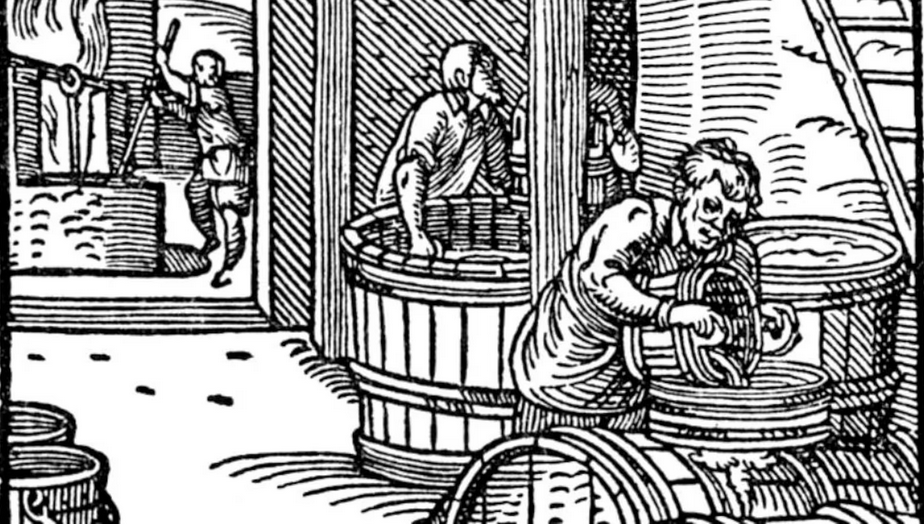
The Beerbrewer, by Jost Amman.

Dr Susan Flavin (TCD): ‘Drunk? Adventures in 16th Century Brewing’

Thursday 6 February 2025 at 6pm (27 University Square, QUB, Belfast, Room 01/003)

This seminar will consist of a screening of Susan’s film on re-creating sixteenth-century beer and will be followed by a facilitated discussion. No doubt this will be of particular interest to those intrigued by interdisciplinary research, public history, and (of course) beer!

This seminar focusses on practice-based approaches to history through the lens of the ERC FoodCult brewing project. The project was a major interdisciplinary initiative, bringing together historians, archaeologists, scientists, and craftspeople, to recreate beer from sixteenth-century Ireland. The journey was captured by a team of academic film makers. This resulting film captures the complexities of historical recreation while reflecting on the intersections of art, science, and history. It highlights how embodied and material engagement with the past can generate fresh historiographical insights and invite broader audiences to connect with history. The seminar will comprise a screening of the film, followed by discussion and reflection on historical recreation as a methodology, and its potential for radical cross disciplinary collaboration.

Due to the nature of this seminar, it will be in-person only, so please join us at 6pm in 27 University Square, Queen’s University Belfast, BT7 1NN. As usual, parking is free in the carpark at McClay Library after 4.30pm. More information is available at the event’s Eventbrite page.

USIHS Seminar: Andrew McKillop

Dr Andrew Mackillop (University of Glasgow): ‘Corporation, Province, and Empire: Ulster and the English East India Company, c.1700-c.1820

Thursday 5 December, 6pm-7.30pm. In-person in 27 University Square 01/003, Queen’s University Belfast and online via Teams.

Abstract: Ulster’s relationship with British imperialism is arguably one of the better understood aspects of Ireland’s long and complex involvement with English and British imperialism. Yet this is a history which is noticeably uneven, with certain periods and geographies garnering more attention than others. Compared to understandings of the era of ‘plantation’, mass transatlantic migration from c.1700 to c.1850s, or the Victorian and Edwardian phases of conspicuous military and industrial participation in Britain’s world system, the role of Ulster in the English East India Company’s trade and expansion in early modern Asia remains relatively underexplored. The paper charts the chronology and character of Ulster networks inside the London-based corporation which until 1813 controlled half of Britain’s global empire. It also reflects on the implications of these transhemispheric connections for assessing Ulster’s place in Ireland and in the British Empire during the long eighteenth century.

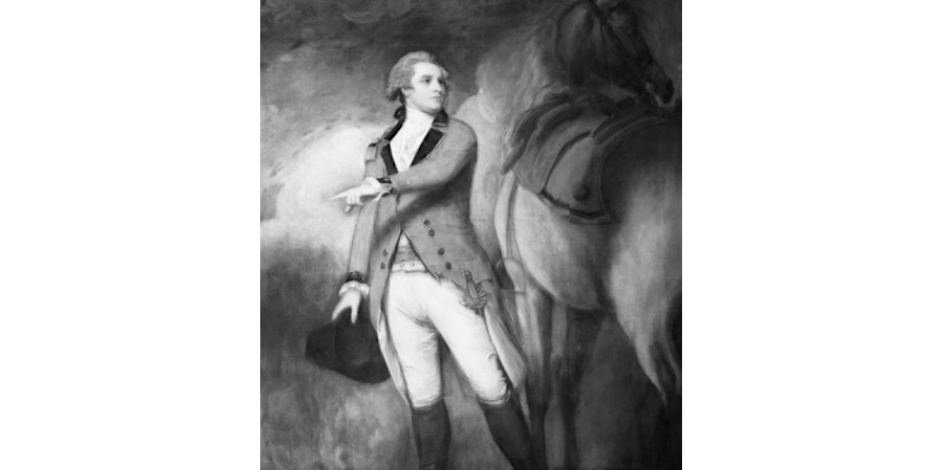
Image: George Romney, ‘Colonel Jacob Camac (1783)’ © American National Gallery of Art

RECORDING AT: USIHS seminar_ Andrew Mackillop-20241205_180359-Meeting Recording.mp4

REGISTER AT: https://www.eventbrite.ie/e/andrew-mackillop-ulster-and-the-english-east-india-company-c1700-1820-tickets-1088535311419?aff=oddtdtcreator