New Approaches to the History of Sexuality Panel – with Mary McAuliffe (UCD), Páraic Kerrigan (UCD) and Tom Hulme (QUB)

Thursday 22 October at 6pm – In-person at 27 University Square 01/003, QUB and Online
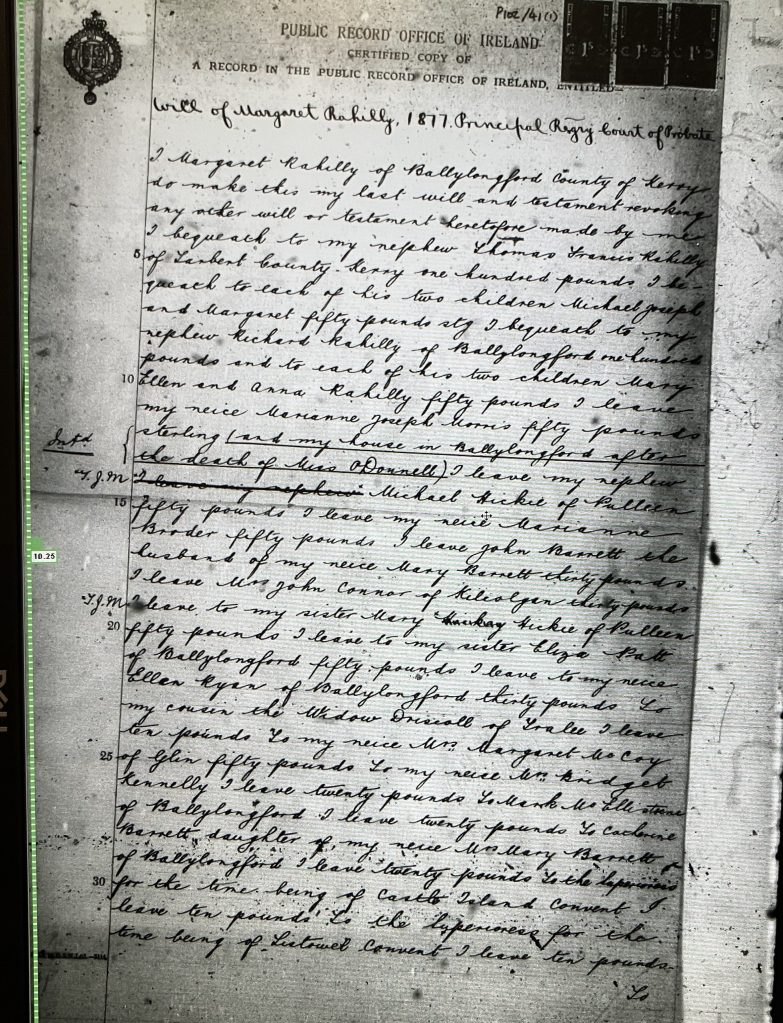
Mary McAuliffe (UCD): Death Reveals Her; Using Death Notices, Graves, Wills, and Obituaries to research Queer Irish Femininities.

Abstract:

Researching queer and Irish femininities in the archives is more a process of the potential rather than of the visible; however, this does not mean that riches do not await the queer eye/queer lens. While gay men are more obvious in the records, because they are men and because homosexuality was criminalised, queer women are invisible and marginalised both for being women and for being lesbians. Using a small cohort of queer revolutionary women, based both in Dublin and in Monaghan, as a case study, this research seeks to use records concerning death (wills, obituaries, death notices, funeral rites, burials and grave notices) to uncover these lives.  Unacknowledged publicly as lesbian are sometimes revealed as queer in those moments of death, remembrance and grief. Here I will look to the relatively new field of Queer Death Studies (QDS) to draw attention to ‘critical attention to discourses on death, dying and mourning that are linked to heteronormative family bonds’ but are also linked to ‘non-normative modes of life and companionship’. Using a number of case studies, I will take a QDS lens to the deaths and afterlives of several queer female revolutionary couples and two non-revolutionary case studies of a similar time period. While cognisant of the fact that this study concentrates on public and/or middle class women (those from sources around death exist in the archives) this research seeks, as QDS notes, to ‘challenges the conventional normativities, assumptions, expectations and regimes of truths that are brought to life and made evident by death, dying and mourning’ and offer one way (among many) of researching queer Irish histories.

Mary McAuliffe is a historian and lecturer in Gender Studies at UCD and holds a PhD from the School of History and Humanities, Trinity College Dublin. Her latest publications include (co-authored with Harriet Wheelock) is The Diaries of Kathleen Lynn: A Life Revealed through Personal Writing (UCD Press, 2023) and Margaret Skinnider; a biography (UCD Press,2020). Other publications include (co-edited with Miriam Haughton and Emilie Pine) Legacies of the Magdalen Laundries: Commemoration, gender, and the Postcolonial Carceral State. She is co-editor with Jennifer Redmond of The Politics of Gender and Sexuality in Modern Ireland (Four Courts Press, 2024), as well as We were there; 77 women of the Easter Rising (with Liz Gillis), and Kerry 1916; Histories and Legacies of the Easter Rising on which she was a co-editor. Throughout the Decade of Centenaries 2012-2023 she has been conducting extensive research on the experiences of women during the War of Independence and Civil War and is currently completing her book based on that research, OUTRAGE: Gendered and Sexual Violence in the Irish War of Independence and Civil War, 1919-1923 (forthcoming 2026). She is a past President of the Women’s History Association of Ireland, a member of the Irish Women’s Museum Advocacy Group, and a member of the Humanities Institute, UCD. She was appointed to the Advisory Committee on the Representation of Women and Women’s Stories within the collections of the National Cultural Institutions in March 2024. She is also a Fellow of the Royal Historical Society.

Páraic Kerrigan (UCD): Waking the Hirschfeld: An Oral and Archival History of Dublin’s Hirschfeld Centre, 1979-1987

Abstract:

On St. Patrick’s Day in 1979, the Hirschfeld Centre opened its doors at 10 Fownes St in Dublin and became one of the most significant institutions in queer Irish history. Despite operating for only eight years, the political, social and cultural activities of the Hirschfeld became an important site for the development of queer Irish culture. In this paper, I argue that, in the decades since its closure after a fire in 1987, the Hirschfeld has functioned as a site of individual and collective remembering, focusing the often-competing memories of people who spent time there and demonstrating the potentially contentious fault lines that can inform memory, identity and place. Drawing upon interviews with community members who experienced the Hirschfeld Centre during its operation, the research team developed a strategy of ‘close and distant listening’. The approach reflected the practical necessity of differing geographical locations and yet, at the same time, rhymed with the subject matter of the research: disjunctive temporalities and dislocated spatialities. The research team’s methodology points toward the diversity of ways to recognize emotions associated with remembering queer spaces and offers an ethical approach acknowledging the researchers’ affective and geographical positionality.

Dr. Páraic Kerrigan is an Assistant Professor in the School of Information and Communication Studies. He is an Irish Times bestselling author of Reeling in the Queers: Tales of Ireland’s LGBTQ Past and has also just released his second non-fiction book, Pop Culchie: The Irish Popular Culture That Made Us. 

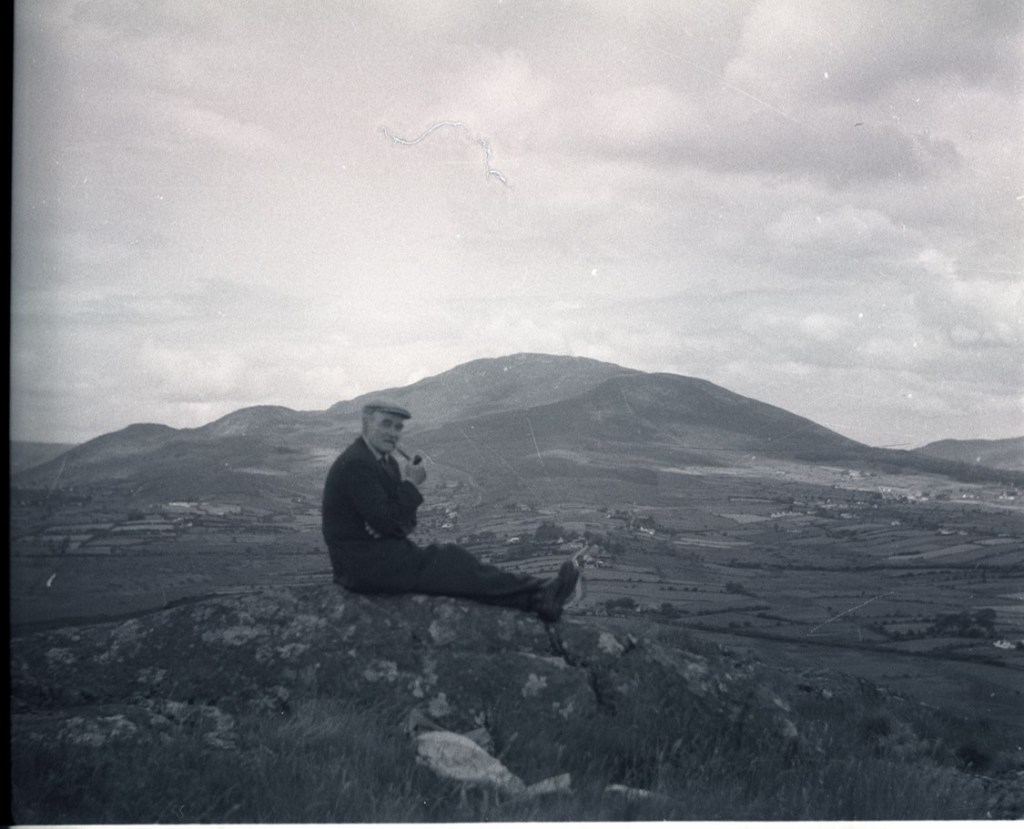
Tom Hulme (QUB): Magic, folklore collecting, and queerness in 20th century rural Antrim

Abstract:

Ireland has rarely been considered as a site of queer possibility before the gay liberation movement got going in the 1970s. The common assumption has been that repressive religion and government – Catholic and Protestant, south and north – successfully clamped down on any sign of sexual deviance. The little work that has been done – admittedly including my own – focuses only on the major cities of the island, Belfast and Dublin. Modern urban life has long been seen as the sine qua non of modern homosexuality, but this “metronormativity” can often lead to a false dichotomy of the liberating city and the repressive rural.  If the spaces and networks of the city could indeed enable queer subcultures to come into formation, so too could the privacy and sociability of the countryside, if on a distinctly smaller scale. In this paper, I refocus Irish queer history on the countryside. Using case studies drawn from both the criminal-legal archive and the papers of folklore collectors, I argue that a specific combination of rural superstition, sexual ignorance, and community self-protection allowed for a certain degree of queer possibility in the era before a strong discourse of “homosexuality”. I conclude that many queer encounters – from the mundane to the mystical – could take place far beyond the prying eyes of priests and police.  

Tom Hulme is a Professor in the School of History, Anthropology, Philosophy and Politics at Queen’s University Belfast, where he has taught for a decade. He was the principal investigator of the AHRC-funded project “Queer Northern Ireland: Sexuality before Gay Liberation” and his book – Belfastmen: An Intimate History of Life before Gay Liberation – was published earlier this year by Cornell University Press. 
Register at: https://www.ticketsource.com/ulster-society-for-irish-historical-studies/usihs-new-approaches-to-the-history-of-sexuality-panel/e-jlxxkmz

USIHS JC Beckett Memorial Lecture 2026

Prof. Roisín Higgins (Maynooth), ‘Embodied Conflict: Sensory Histories of the Troubles’

Please join us on Thursday 14 May at 6pm for the Ulster Society for Irish Historical Studies’ annual J.C. Beckett Lecture which will be held at PRONI. All are very welcome. This event will be in person only.

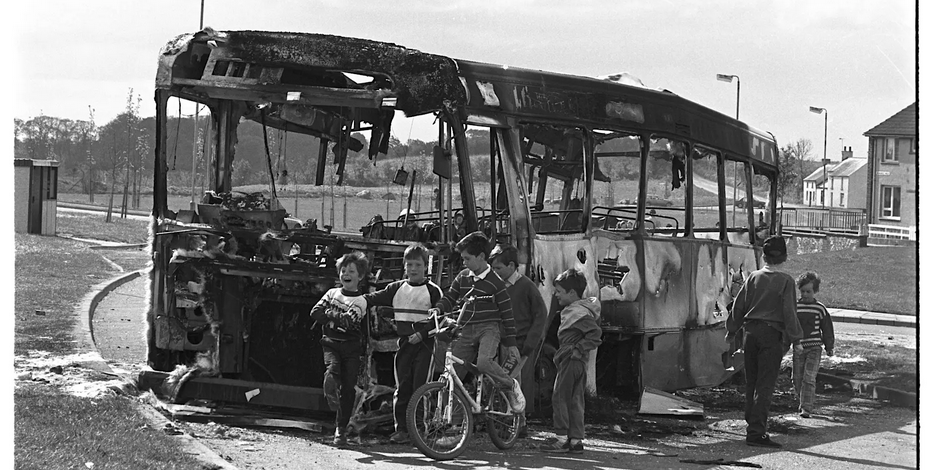
‘On bad days it was intangible,’ Clare remembered of Belfast, ‘The city felt different. There was an atmosphere, even though we didn’t leave our gardens.’ When Denis was a child going to school, sometimes he could smell the heavy plastic of burning buses and lorries from a riot the night before, ‘It lingered in the air’. These glimpses into the lives of people who experienced the Troubles do not appear in political narratives of the conflict, but they provide a powerful sensory record of what it was like to live with and in proximity to violence.

In this lecture, Roisin Higgins talks about her work gathering sensory memories in order to write a different history of the Troubles – one that takes account of the sights, sounds, smells, taste and touch of lived experience. It is through our senses that we encounter and make meaning of the world around us, providing historians with vital insights. From the smell of melted plastic in bomb damage sales, to the touch of a cobbled wall on the day of an atrocity, to the deep silence in the wake of an explosion, Roisín’s research aims to capture these almost forgotten aspects of the conflict and to show the importance of the stories we carry in our bodies.

Image credit: The burning bus was taken in Downpatrick in the 1980s and is part of the Bobbie Hanvey collection in Boston College, MS2001_039_885.

Free Event. REGISTER AT: https://www.eventbrite.co.uk/e/roisin-higgins-embodied-conflict-sensory-histories-of-the-troubles-tickets-1987899271233?aff=oddtdtcreator&keep_tld=true

USIHS Lecture: Prof David Dickson (TCD)

‘The Foyle, the Chesapeake, and a fifty-year transatlantic conversation: Getting the measure of the Moore family archive, 1798-1847′

Thursday 23 April at 6pm. In-person at 27 University Square, 01/003, Queen’s University Belfast, and Online via Teams

Emigrant letters have long been an important source for studying the evolution of the Irish diaspora–and have indeed helped to shape the idea of a diaspora.  After briefly reviewing the recent literature on the emigrant letter, the talk will focus on a single collection that has heretofore attracted almost no notice: the Moore papers, a collection of some 900 letters, most of which  remained until recently in private hands, their survival a story in itself.  The collection documents a two-way transatlantic conversation, principally between Derry city and Baltimore, that involved two generations of an extended bourgeois family, and in the case of the central characters it spans their whole adult lives.  Taken together the letters give a unique insight into an extended family of readers, affectionate gossipers and canny observers of a changing Ireland and a changing America.  The geographical fracturing of the Moore family as a result of 1798, some staying in Ireland, others making a go of it in Maryland, created a transatlantic network of family and friends that was held together by often anxious, sometimes exuberant exchanges reflecting intense bonds of affection, and the survival of this extraordinary conversation on paper provides insights that may be of wider relevance. 

David Dickson is Professor Emeritus of Modern History in Trinity College Dublin and a Member of the Royal Irish Academy.  He has published extensively on the social, economic and cultural history of Ireland since the seventeenth century, with a recurring interest in the regions.   Past projects have ranged from famine, estate history, eighteenth-century urbanization to the 1798 rebellion and Ireland’s entanglement with empire.  Major publications have included Old world colony: Cork and South Munster 1630-1830 (Cork & Madison, 2005); Dublin: The making of a capital city (London & Cambridge, MA, 2014), and The first Irish cities: An eighteenth-century transformation (New Haven & London, 2021).  He has recently published chapters in Ireland, slavery and the Caribbean, eds. Finola O’Kane & Ciaran O’Neill (Manchester, 2023) and in Waterford and the wider world 1575-1825, ed. John Bergin et al. (Dublin, 2026), and an essay on ‘Dublin port in times of famine’ in the Dublin Historical Record, 78 (2025).  He is currently part of a team of five editors that have prepared The Moore letters for publication by the Irish Manuscripts Commission.

Image: Samuel Moore at work, c. 1835

USIHS Lecture: Dr Antonia Hart (TCD)

‘Ulster women in business and  bankruptcy, 1888-1922’

Thursday 5 March 2026, at 6pm in Institute of Irish Studies, 27 University Square, 01/003, Queen’s University. Belfast and Online. All welcome.

Bankruptcy records held at PRONI contain a multiplicity of Irish women’s stories. Detailed financial records show patterns of supply and trading, the extension of credit, recourse to borrowing, and illustrate the constant battle to balance outgoings with income. Schedules of assets give an insight into the material culture of a business, and vividly depict how a woman’s public commercial life could be entangled with her private domestic life. Antonia Hart introduces us to the lives and work of the beleaguered businesswomen across Antrim and Down whose businesses were captured in this valuable archive between 1888 and 1922, and considers the new ways in which we can reflect on Irish women’s lives thanks to these records.

Antonia Hart’s research interests centre on nineteenth- and early twentieth-century Irish social and economic history, with a focus on women’s history. She completed her PhD, funded by an Irish Research Council Government of Ireland Postgraduate Scholarship, at Trinity College Dublin in 2021, as a graduate fellow at the Trinity Long Room Hub Arts and Humanities Research Institute. Her doctoral thesis examined Irish women in business, which is also the subject of her new book Business as Usual: the commercial lives of Irish women, 1850-1922, (Liverpool University Press, 2025). Her previous books include Ghost Signs of Dublin (History Press Ireland, 2014); and, with Arthur Edward Guinness, Guinness: A Family Succession (Scala, 2025). Recent shorter publications include ‘Taking the Pledge: women and pawnbroking in nineteenth-century Ireland’, in Jennifer Redmond and Mary McAuliffe, eds., The Politics of Gender and Sexuality in Modern Ireland (Four Courts Press, 2024); ‘Fire at the South City Market’, in Sarah Binchy ed., Sunday Miscellany A Selection 2023-2025 (New Island, 2025); and ‘Sole Trader’, in Nessa O’Mahony, ed., Tearing Stripes off Zebras: forty years of women writing in Ireland (Arlen House, 2023). She has been a Visiting Research Fellow at Trinity College Dublin, working on the Trinity Colonial Legacies project, and a lecturer in History of Education at Maynooth University. She is currently Dublin City Council Culture Company Historian-in-Residence for Dublin South East.

USIHS Lecture: ‘Violence, Colonialism and the Mid-Tudor Monarchy: Ireland in Context’

Prof Neil Murphy (Northumbria University)

Thursday 19 February 2026, 6pm (online and in-person in 27 University Square 01/003, QUB, Belfast)

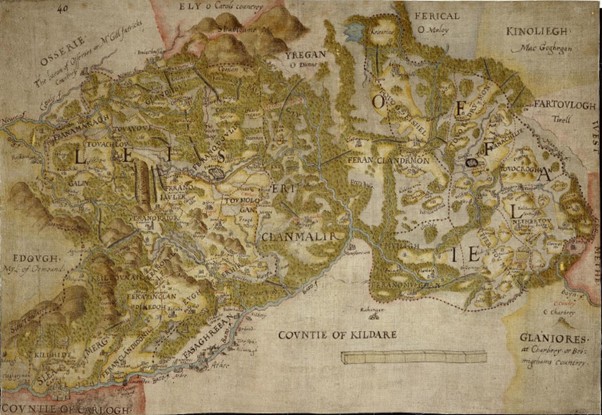
This paper re-examines the origins of the early modern English—later British—Empire, which is traditionally traced to the establishment of colonies in Ireland during the second half of the sixteenth century. Historians have long asserted that these ventures saw the emergence of uniquely brutal methods of warfare. According to this argument, the Irish were savages and thus the restraints on violence typically used when fighting other Europeans did not apply when campaigning in Ireland. This paper situates the interplay between violence and colonialism seen in Ireland within the broader context of mid-Tudor territorial expansion, showing that English practices in Ireland were far from unique. The plantations of Laois and Offaly in the 1550s built on earlier Tudor colonial experiments in on the continent, while extreme violence was widely inflicted on civilian populations during Henry VIII’s wars in France and Scotland. By adopting a comparative approach to Tudor frontiers and situating actions in Ireland in a broader context, this paper offers fresh insights into the interplay between violence and territorial expansion in the sixteenth century.

Biography: I am Professor of Medieval and Early Modern History and the Head of the School of Humanities and Social Sciences at Northumbria University. I have published on a range of topics between the thirteenth and eighteenth centuries, though much of my recent work has focused on the wars of Henry VIII. I have published five books – including The Tudor Occupation of Boulogne (CUP, 2019) and Henry VIII, the Duke of Albany and the Anglo-Scottish War of 1522-4 (Woodbridge, 2023) – and am currently finishing two books further on Henry VIII. The first looks at his European ambitions, while the second examines his use of spying and espionage.

All welcome: Register here: https://www.eventbrite.co.uk/e/violence-colonialism-and-the-mid-tudor-monarchy-ireland-in-context-tickets-1982004142745?aff=oddtdtcreator

USIHS Lecture – Dr Henry Jefferies, ‘Irish women and the Reformation’

Thursday 4 December at 6pm (27 University Square 01/003, Queen’s University Belfast, and online).

You are very welcome to the final USIHS seminar of 2025 when Dr Henry Jefferies will speak on Irish women and the Reformation. This is a free event open to all.

The Protestant Reformation of the sixteenth century represented the greatest religious crisis in European history since the conversion of the Roman emperor Constantine to Christianity in the fourth century. Protestant reformers characterised the Catholic Church as an evil entity headed by the Antichrist, with doctrines and religious practices that were false. The Reformers looked to the ‘Word of God’, the Bible, to recreate the Church of Jesus de novo. They confronted women with a choice that was more important than simply a question of life and death – it concerned life after death! The Bible was clear as to how a woman was supposed to make her choice: 

“If there is anything they desire to learn, let them ask their husbands at home”. 1 Corinthians 14:34-35 ESV.

“Let a woman learn quietly with all submissiveness. I do not permit a woman to teach or to exercise authority over a man; rather, she is to remain quiet”. 1 Timothy 2:11-14 ESV

This paper looks at the responses of Irish women to the Reformation. It reveals that despite the Bible’s injunctions, they exercised considerable agency, perhaps even decisive agency, in the religious struggles of the sixteenth century.

RECORDING:

USIHS Lecture – Dr Sophie Cooper (QUB): Building to feel ‘at home’

USIHS Seminar. Online only, Thursday 13 November at 7pm.

Building to feel ‘at home’: Embedding/embedded memory in the built environments of Belfast and the diaspora.

This paper will explore the varied ways that parishioners, particularly female parishioners, have used and ‘put their mark’ on religious buildings to facilitate a sense of belonging in Ireland and abroad. Drawing on research from Sophie’s ‘Mapping Belfast’s Places of Worship’ project and her wider work on migrant belonging in the Irish diaspora, this paper explores some of the ways that people in the past used their built environments to feel ‘at home’. It will also consider some of the ways that demographic shifts have led to the repurposing or changing use of these buildings – and the (not so) hidden histories that they have embedded in them.

Dr Sophie Cooper is President of the Ulster Society of Irish Historical Studies and Senior Lecturer in Liberal Arts at Queen’s University Belfast. She is a historian of Ireland and the Irish diaspora in the nineteenth and early twentieth centuries. Sophie’s first book Forging Identities in the Irish World: Melbourne and Chicago, c.1830-1922, was published by Edinburgh University Press in 2022 and won the ACIS Lawrence J. McCaffrey Prize for Books on Irish America.

RECORDING:

USIHS Lecture

Thursday 16 October: 6pm (27 University Square/01/003 (QUB) and online via Teams)

Seán Ó Hoireabhárd (Maynooth University), ‘When Ulster became Ulster and Meath became Meath: The divorce of the Northern and Southern Uí Néill in the Central Middle Ages’

Free event – all welcome!

RECORDING:

Abstract:

The Uí Néill dynasty were the most important political collective in medieval Ireland. From the very beginning of recorded history down to the seventeenth century and the end of the Gaelic order, their leading men were consistently among the most powerful on the island. They controlled both the midlands and north-west Ulster, and their literary output and propaganda promoted the notion that ‘Tara’ was a metonym for Ireland – and so, to be ‘king of Tara’ meant to be ‘king of Ireland’. The Southern and Northern branches of the dynasty alternated in this role, and while it was at times more aspirational than demonstrable, there were kings of Tara who manifested their authority across the island, convincing even their most trenchant enemies of their prestige. But the system of alternating kingship that worked so well to cement their power failed around the turn of the millennium, and by the twelfth century new identities prevailed. ‘Mide’, ‘Meath’, literally ‘Middle’ came to be seen as a province stretching from the Shannon to the sea, while an idea of a province called ‘the North’, which reached from coast to coast also began to be articulated. Ultimately, this acquired the name of an older identity, ‘Ulster’. This paper looks at the political successes and failures of the Uí Néill in the Central Middle Ages, asking how their common identity broke down and considering how new ones took their place.

J.C. Beckett Lecture 2025

Prof. Laura Kelly (University of Strathclyde):

‘The Anti-Abortion Movement in Ireland, c.1972-92’

Thursday 22 May 2025, 6pm, at PRONI.

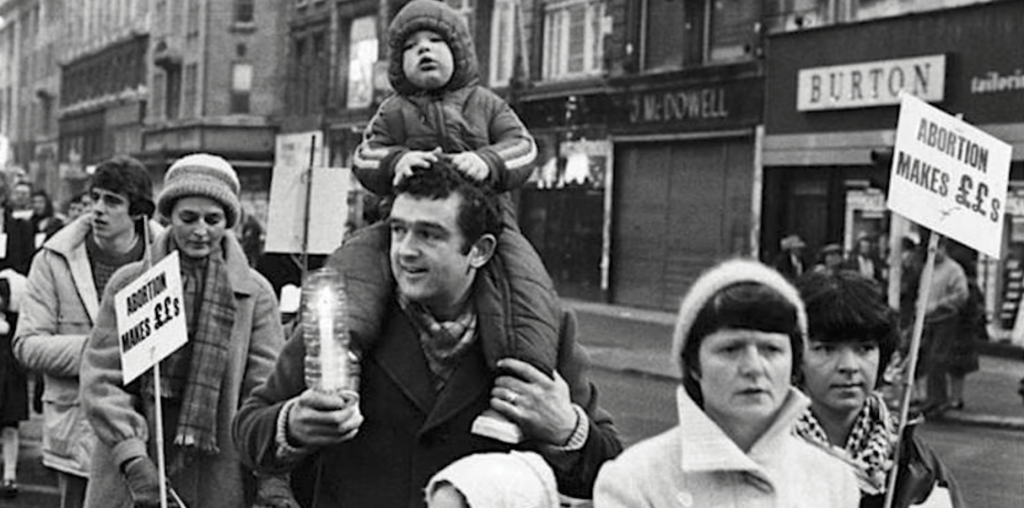
This lecture explores the history of anti-abortion activism in Ireland from the early 1970s to the early 1990s. Utilising oral history interviews with activists and a range of rich archival sources including anti-abortion publications, government archives, diocesan records and contemporary newspapers, it traces the history of one of the most significant social movements in Ireland. Drawing on approaches from the history of emotions, oral history, and gender history, it discusses show how and why the anti-abortion movement gained such strength in 1970s and 1980s Ireland, what motivated ‘ordinary’ people to get involved in it, the campaigns and strategies of activists, and what its success and ultimate decline reveal about wider changes in Irish society. I will argue that transnational networks, particularly between Irish and American activists, were crucial to the success of the movement in its early years. Ultimately, by illuminating the experiences, motivations, and strategies of anti-abortion activists, this paper helps to better contextualise the wider battle around reproductive rights in Ireland, and the ongoing legacy of this activism.

The J.C. Beckett Annual Lecture is hosted by the Ulster Society for Irish Historical Studies. This is a free public event, all welcome.

Register at: https://www.eventbrite.ie/e/the-anti-abortion-movement-in-ireland-c1972-92-tickets-1291413485499