USIHS Lecture: ‘Violence, Colonialism and the Mid-Tudor Monarchy: Ireland in Context’

Prof Neil Murphy (Northumbria University)

Thursday 19 February 2026, 6pm (online and im-person in 27 University Square, QUB, Belfast)

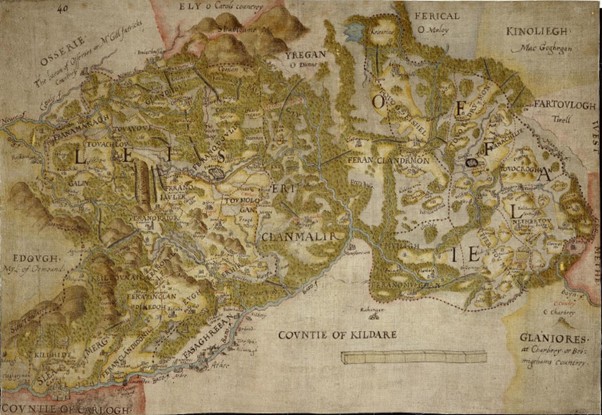
This paper re-examines the origins of the early modern English—later British—Empire, which is traditionally traced to the establishment of colonies in Ireland during the second half of the sixteenth century. Historians have long asserted that these ventures saw the emergence of uniquely brutal methods of warfare. According to this argument, the Irish were savages and thus the restraints on violence typically used when fighting other Europeans did not apply when campaigning in Ireland. This paper situates the interplay between violence and colonialism seen in Ireland within the broader context of mid-Tudor territorial expansion, showing that English practices in Ireland were far from unique. The plantations of Laois and Offaly in the 1550s built on earlier Tudor colonial experiments in on the continent, while extreme violence was widely inflicted on civilian populations during Henry VIII’s wars in France and Scotland. By adopting a comparative approach to Tudor frontiers and situating actions in Ireland in a broader context, this paper offers fresh insights into the interplay between violence and territorial expansion in the sixteenth century.

Biography: I am Professor of Medieval and Early Modern History and the Head of the School of Humanities and Social Sciences at Northumbria University. I have published on a range of topics between the thirteenth and eighteenth centuries, though much of my recent work has focused on the wars of Henry VIII. I have published five books – including The Tudor Occupation of Boulogne (CUP, 2019) and Henry VIII, the Duke of Albany and the Anglo-Scottish War of 1522-4 (Woodbridge, 2023) – and am currently finishing two books further on Henry VIII. The first looks at his European ambitions, while the second examines his use of spying and espionage.

All welcome: Registration link to follow.

Irish Historical Studies First Book Prize

Irish Historical Studies requests submissions for a First Book Prize from scholars resident on the island of Ireland for an academic book on an Irish or Irish Diasporic historical subject published in the calendar year 2024.

Submissions must be of the author’s first sole-authored academic book on a historical topic dealing primarily with the history of Ireland and/or its diaspora. Submissions should take the form of one hard copy of the book, as well as a pdf of the text. Submissions should be posted to the chair of the assessment committee by the deadline of 1 March 2025. The winner of the prize will be awarded €500 by the Board of Irish Historical Studies. Submissions may be made either by the author or publisher.

To apply: please download and complete the pre-submission form below and email as soon as possible to the assessment committee chair, Prof. Peter Gray, at p.h.gray@qub.ac.uk.

Book submissions should then be sent by 1 March 2025 to Prof. Gray at School of HAPP, Queen’s University Belfast, BT7 1NN, N. Ireland, with pdfs emailed to the email address above.

Assessment Committee 2025 (on behalf of Irish Historical Studies): Prof Peter Gray (QUB), Dr Sophie Cooper (QUB), Dr Andrew Sneddon (UU).

USIHS Seminar: Andrew McKillop

Dr Andrew Mackillop (University of Glasgow): ‘Corporation, Province, and Empire: Ulster and the English East India Company, c.1700-c.1820

Thursday 5 December, 6pm-7.30pm. In-person in 27 University Square 01/003, Queen’s University Belfast and online via Teams.

Abstract: Ulster’s relationship with British imperialism is arguably one of the better understood aspects of Ireland’s long and complex involvement with English and British imperialism. Yet this is a history which is noticeably uneven, with certain periods and geographies garnering more attention than others. Compared to understandings of the era of ‘plantation’, mass transatlantic migration from c.1700 to c.1850s, or the Victorian and Edwardian phases of conspicuous military and industrial participation in Britain’s world system, the role of Ulster in the English East India Company’s trade and expansion in early modern Asia remains relatively underexplored. The paper charts the chronology and character of Ulster networks inside the London-based corporation which until 1813 controlled half of Britain’s global empire. It also reflects on the implications of these transhemispheric connections for assessing Ulster’s place in Ireland and in the British Empire during the long eighteenth century.

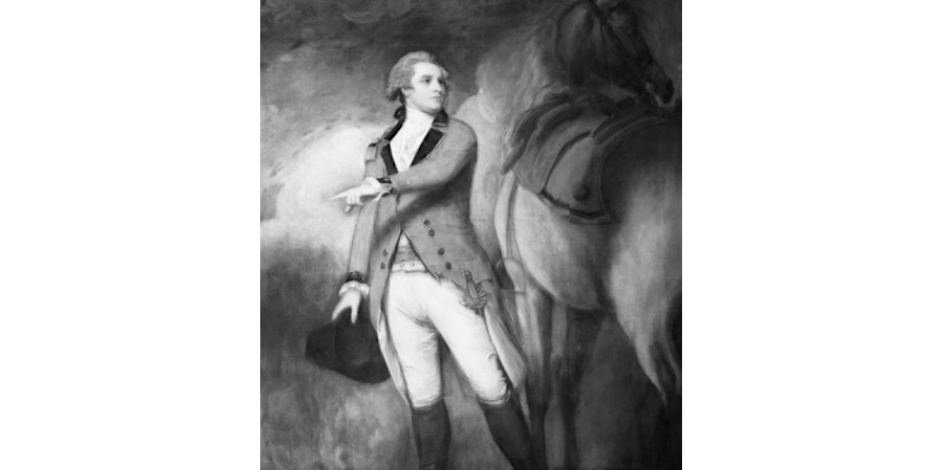
Image: George Romney, ‘Colonel Jacob Camac (1783)’ © American National Gallery of Art

RECORDING AT: USIHS seminar_ Andrew Mackillop-20241205_180359-Meeting Recording.mp4

REGISTER AT: https://www.eventbrite.ie/e/andrew-mackillop-ulster-and-the-english-east-india-company-c1700-1820-tickets-1088535311419?aff=oddtdtcreator

USIHS J.C. Beckett Memorial Lecture 2024

Dr Clodagh Tait: ‘Margaret Isabella and the fairy in the churn: Women’s folklore and girls’ histories’

Thursday 9 May at 6pm. Public Record Office of Northern Ireland, 2 Titanic Boulevard Titanic Quarter Belfast BT3 9HQ (and online via Zoom)

The Ulster Society for Irish Studies (USIHS) and the Public Record Office of Northern Ireland (PRONI) would like to welcome you to the annual 2024 Beckett lecture, in memory of the late Professor J. C. Beckett. This year’s talk will be by Dr Clodagh Tait of Mary Immaculate College, Limerick. The lecture is free and open to the public.

The last decades have seen a flourishing of studies of Irish women’s history and writing, providing new insights into women’s roles in politics, communities and domestic life, and greater understanding of how they grappled with the strictures placed on their freedoms. However, some women are inevitably less visible than others in the surviving sources. The Irish folklore collections (compiled from the 1930s), publications on folklore and folklife, and a variety of other sources, can help to fill some of the gaps in our knowledge about women’s experiences, customs and worldviews. In this paper I will discuss women’s folklore, considering in particular stories told by girls and women about the ways of the ‘good people’, or about childhood experiences interpreted as being encounters with fairies. Worn smooth and warm with retelling (though there are hints at sharp edges too), these stories assist us in reconstructing supernatural beliefs and the actions they prompted. And they also reveal something about how narratives about fairies were shaped by community input, how personal pasts were recollected, and how girls’ histories were handed down.

Clodagh Tait lectures in Mary Immaculate College, Limerick. She has written extensively on early modern Irish social and cultural history, including the history of women and men; pregnancy, childbirth and child-rearing; death, violence, martyrdom and protest; religious devotion; and the history of emotion. Her recent articles include studies of a Cork ghost story from 1688-9, of accounts of ‘crisis apparitions’ in Ireland and the USA, and of the magical and supernatural labours of women in the nineteenth and twentieth centuries. She is working on an anthology of women’s folklore and a book on cursing and blessing in Ireland over 400 years. She is joint editor of Irish Historical Studies.

Please register at: https://www.eventbrite.co.uk/e/margaret-isabella-and-the-fairy-in-the-churn-tickets-880652063027