Prof Neil Murphy (Northumbria University)
Thursday 19 February 2026, 6pm (online and in-person in 27 University Square 01/003, QUB, Belfast)
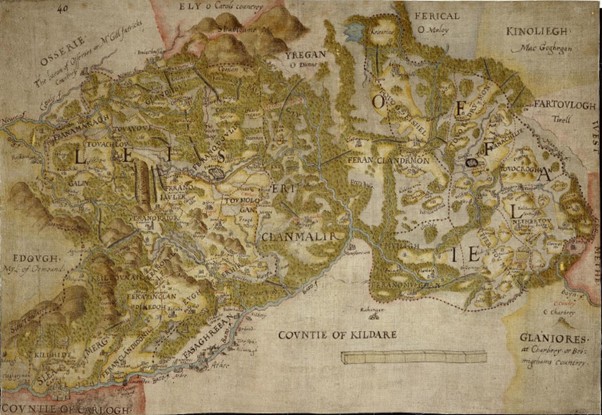
This paper re-examines the origins of the early modern English—later British—Empire, which is traditionally traced to the establishment of colonies in Ireland during the second half of the sixteenth century. Historians have long asserted that these ventures saw the emergence of uniquely brutal methods of warfare. According to this argument, the Irish were savages and thus the restraints on violence typically used when fighting other Europeans did not apply when campaigning in Ireland. This paper situates the interplay between violence and colonialism seen in Ireland within the broader context of mid-Tudor territorial expansion, showing that English practices in Ireland were far from unique. The plantations of Laois and Offaly in the 1550s built on earlier Tudor colonial experiments in on the continent, while extreme violence was widely inflicted on civilian populations during Henry VIII’s wars in France and Scotland. By adopting a comparative approach to Tudor frontiers and situating actions in Ireland in a broader context, this paper offers fresh insights into the interplay between violence and territorial expansion in the sixteenth century.
Biography: I am Professor of Medieval and Early Modern History and the Head of the School of Humanities and Social Sciences at Northumbria University. I have published on a range of topics between the thirteenth and eighteenth centuries, though much of my recent work has focused on the wars of Henry VIII. I have published five books – including The Tudor Occupation of Boulogne (CUP, 2019) and Henry VIII, the Duke of Albany and the Anglo-Scottish War of 1522-4 (Woodbridge, 2023) – and am currently finishing two books further on Henry VIII. The first looks at his European ambitions, while the second examines his use of spying and espionage.
All welcome: Register here: https://www.eventbrite.co.uk/e/violence-colonialism-and-the-mid-tudor-monarchy-ireland-in-context-tickets-1982004142745?aff=oddtdtcreator
 Ulster Society for Irish Historical Studies