Thursday 22 October at 6pm – In-person at 27 University Square 01/003, QUB and Online
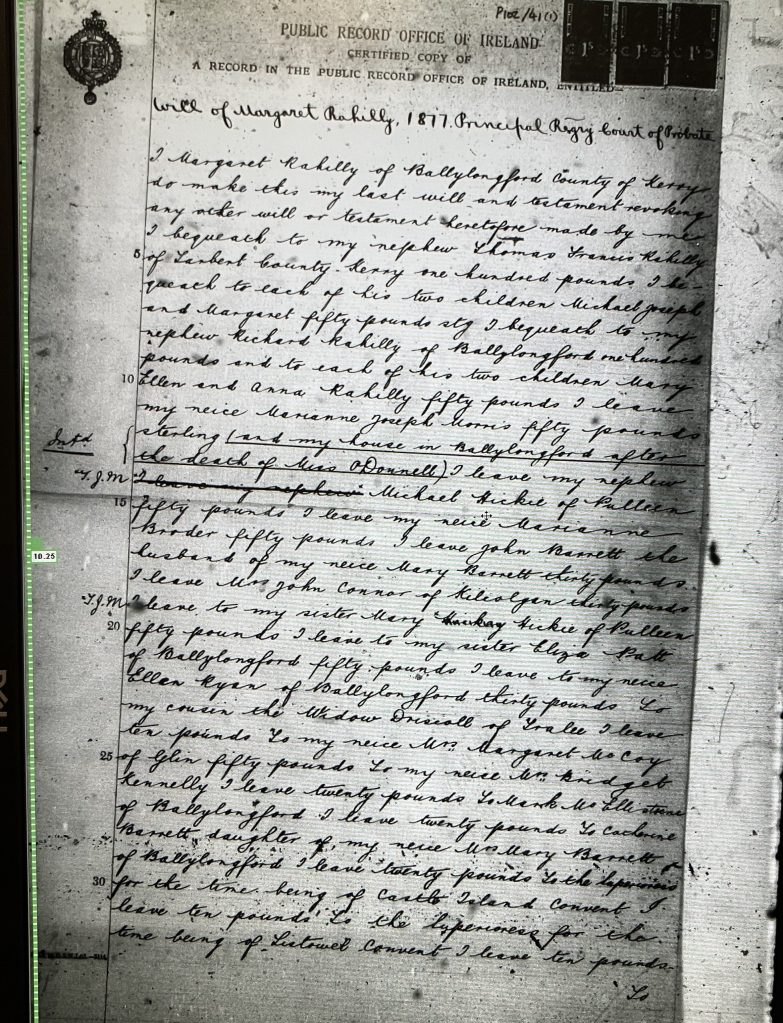
Mary McAuliffe (UCD): Death Reveals Her; Using Death Notices, Graves, Wills, and Obituaries to research Queer Irish Femininities.
Abstract:
Researching queer and Irish femininities in the archives is more a process of the potential rather than of the visible; however, this does not mean that riches do not await the queer eye/queer lens. While gay men are more obvious in the records, because they are men and because homosexuality was criminalised, queer women are invisible and marginalised both for being women and for being lesbians. Using a small cohort of queer revolutionary women, based both in Dublin and in Monaghan, as a case study, this research seeks to use records concerning death (wills, obituaries, death notices, funeral rites, burials and grave notices) to uncover these lives. Unacknowledged publicly as lesbian are sometimes revealed as queer in those moments of death, remembrance and grief. Here I will look to the relatively new field of Queer Death Studies (QDS) to draw attention to ‘critical attention to discourses on death, dying and mourning that are linked to heteronormative family bonds’ but are also linked to ‘non-normative modes of life and companionship’. Using a number of case studies, I will take a QDS lens to the deaths and afterlives of several queer female revolutionary couples and two non-revolutionary case studies of a similar time period. While cognisant of the fact that this study concentrates on public and/or middle class women (those from sources around death exist in the archives) this research seeks, as QDS notes, to ‘challenges the conventional normativities, assumptions, expectations and regimes of truths that are brought to life and made evident by death, dying and mourning’ and offer one way (among many) of researching queer Irish histories.
Mary McAuliffe is a historian and lecturer in Gender Studies at UCD and holds a PhD from the School of History and Humanities, Trinity College Dublin. Her latest publications include (co-authored with Harriet Wheelock) is The Diaries of Kathleen Lynn: A Life Revealed through Personal Writing (UCD Press, 2023) and Margaret Skinnider; a biography (UCD Press,2020). Other publications include (co-edited with Miriam Haughton and Emilie Pine) Legacies of the Magdalen Laundries: Commemoration, gender, and the Postcolonial Carceral State. She is co-editor with Jennifer Redmond of The Politics of Gender and Sexuality in Modern Ireland (Four Courts Press, 2024), as well as We were there; 77 women of the Easter Rising (with Liz Gillis), and Kerry 1916; Histories and Legacies of the Easter Rising on which she was a co-editor. Throughout the Decade of Centenaries 2012-2023 she has been conducting extensive research on the experiences of women during the War of Independence and Civil War and is currently completing her book based on that research, OUTRAGE: Gendered and Sexual Violence in the Irish War of Independence and Civil War, 1919-1923 (forthcoming 2026). She is a past President of the Women’s History Association of Ireland, a member of the Irish Women’s Museum Advocacy Group, and a member of the Humanities Institute, UCD. She was appointed to the Advisory Committee on the Representation of Women and Women’s Stories within the collections of the National Cultural Institutions in March 2024. She is also a Fellow of the Royal Historical Society.
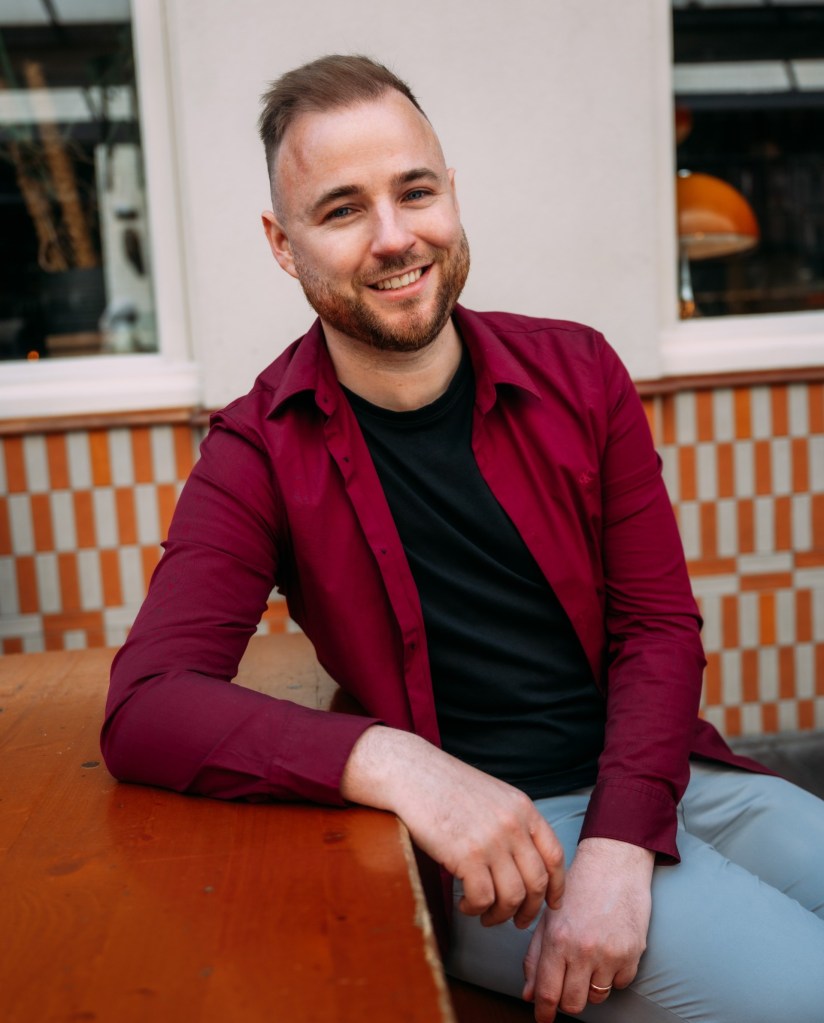
Páraic Kerrigan (UCD): Waking the Hirschfeld: An Oral and Archival History of Dublin’s Hirschfeld Centre, 1979-1987
Abstract:
On St. Patrick’s Day in 1979, the Hirschfeld Centre opened its doors at 10 Fownes St in Dublin and became one of the most significant institutions in queer Irish history. Despite operating for only eight years, the political, social and cultural activities of the Hirschfeld became an important site for the development of queer Irish culture. In this paper, I argue that, in the decades since its closure after a fire in 1987, the Hirschfeld has functioned as a site of individual and collective remembering, focusing the often-competing memories of people who spent time there and demonstrating the potentially contentious fault lines that can inform memory, identity and place. Drawing upon interviews with community members who experienced the Hirschfeld Centre during its operation, the research team developed a strategy of ‘close and distant listening’. The approach reflected the practical necessity of differing geographical locations and yet, at the same time, rhymed with the subject matter of the research: disjunctive temporalities and dislocated spatialities. The research team’s methodology points toward the diversity of ways to recognize emotions associated with remembering queer spaces and offers an ethical approach acknowledging the researchers’ affective and geographical positionality.
Dr. Páraic Kerrigan is an Assistant Professor in the School of Information and Communication Studies. He is an Irish Times bestselling author of Reeling in the Queers: Tales of Ireland’s LGBTQ Past and has also just released his second non-fiction book, Pop Culchie: The Irish Popular Culture That Made Us.
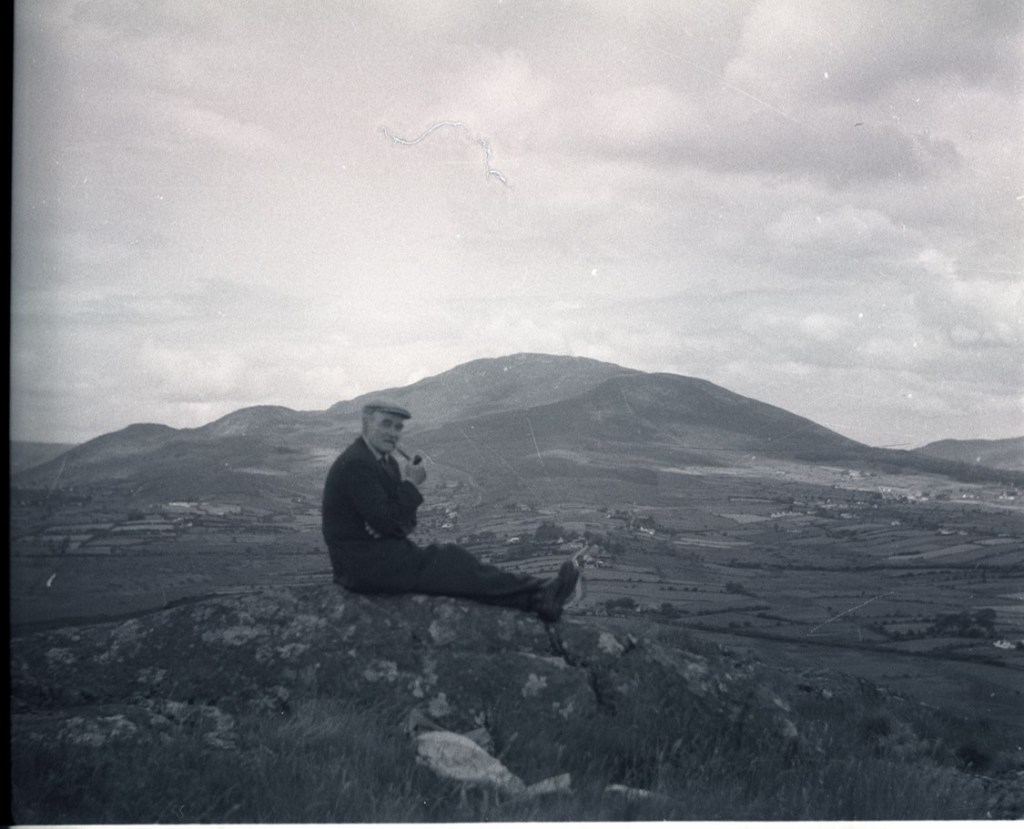
Tom Hulme (QUB): Magic, folklore collecting, and queerness in 20th century rural Antrim
Abstract:
Ireland has rarely been considered as a site of queer possibility before the gay liberation movement got going in the 1970s. The common assumption has been that repressive religion and government – Catholic and Protestant, south and north – successfully clamped down on any sign of sexual deviance. The little work that has been done – admittedly including my own – focuses only on the major cities of the island, Belfast and Dublin. Modern urban life has long been seen as the sine qua non of modern homosexuality, but this “metronormativity” can often lead to a false dichotomy of the liberating city and the repressive rural. If the spaces and networks of the city could indeed enable queer subcultures to come into formation, so too could the privacy and sociability of the countryside, if on a distinctly smaller scale. In this paper, I refocus Irish queer history on the countryside. Using case studies drawn from both the criminal-legal archive and the papers of folklore collectors, I argue that a specific combination of rural superstition, sexual ignorance, and community self-protection allowed for a certain degree of queer possibility in the era before a strong discourse of “homosexuality”. I conclude that many queer encounters – from the mundane to the mystical – could take place far beyond the prying eyes of priests and police.
Tom Hulme is a Professor in the School of History, Anthropology, Philosophy and Politics at Queen’s University Belfast, where he has taught for a decade. He was the principal investigator of the AHRC-funded project “Queer Northern Ireland: Sexuality before Gay Liberation” and his book – Belfastmen: An Intimate History of Life before Gay Liberation – was published earlier this year by Cornell University Press.

